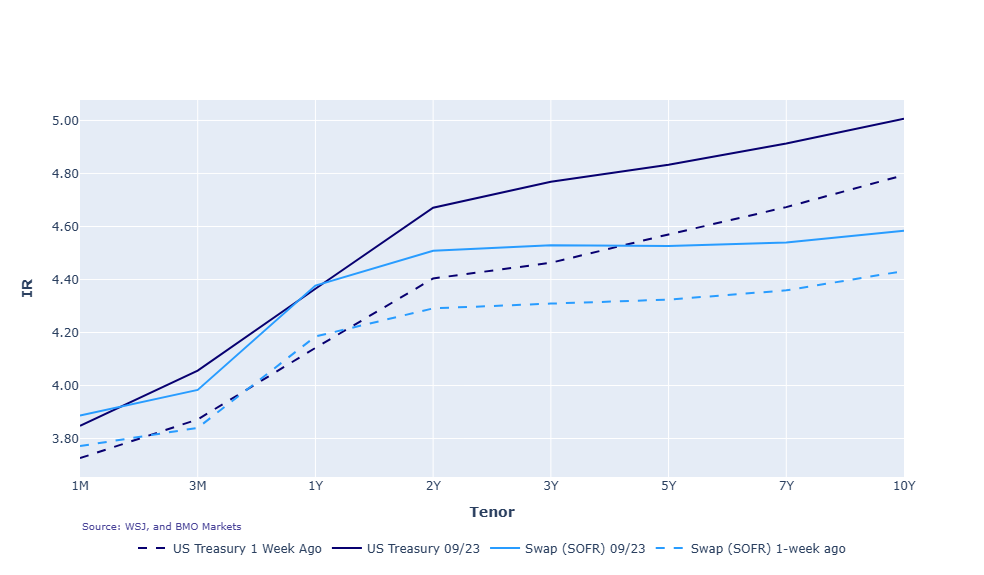
- Rates: Treasury and SOFR swap rates were mixed this week as markets continued digesting the Fed’s rate hike, with shorter maturities moving higher while long-end Treasury yields eased. The resulting flattening suggests markets are pricing a more restrictive near-term policy path while also assigning less inflation risk further out the curve. In effect, the hike pushed up the expected cost of money in the near term while reinforcing confidence that tighter policy will contain longer-term inflation.
- AI Spending Surges: JPMorgan CEO Jamie Dimon projects hyperscaler AI spending could reach $1 trillion in 2027, up from roughly $700 billion this year and adding about 1% to GDP annually. Speaking at JPMorgan’s India Conference, Dimon noted that not every investment comes down to a straightforward ROI calculation: “sometimes it’s just table stakes.” For banks, that distinction matters as AI becomes a form of practical innovation, improving client experience and productivity while helping banks remain competitive. Not every benefit is easily quantified, and waiting for a clear ROI on every use case risks falling behind.
- FDIC Proposes Five-Day Bank Merger Approvals: FDIC Chair Travis Hill proposed a “rapid processing” framework that could cut approval times for certain small acquisitions and operating subsidiary transactions from an average of 107 days to as little as five days. Institutional friction is often thought of as something that exists inside a bank, but for highly regulated institutions, it can just as easily come from outside. Faster and more predictable regulatory decisions can reduce uncertainty and give banks greater confidence to move from strategy to execution.
- Enova Abandons Bank Deal Amid Regulatory Uncertainty: In a counterpoint to the FDIC’s push for faster approvals, Enova withdrew its $369 million acquisition of Grasshopper Bank after nine months, with CEO Steve Cunningham citing a lack of “clear standards” and susceptibility to “political pressure” in the regulatory process. The deal faced opposition from state attorneys general and two Senate Banking Committee members over lending practices and interest-rate limits. It is another example of how institutional friction can come from outside the organization: when regulatory expectations are uncertain, even well-developed strategic initiatives can stall or be abandoned altogether.
Rate Curves