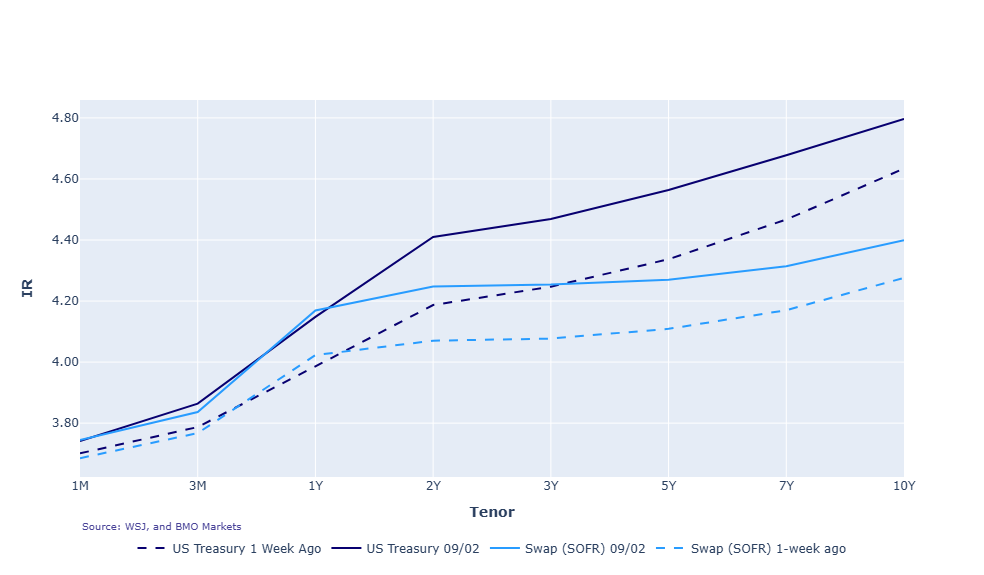
- Rates: Both Treasury yields and SOFR swap rates surged sharply this week, with Treasuries rising more than swaps. The move was driven by Fed Chair Kevin Warsh’s hawkish Jackson Hole speech, which pushed September rate-hike odds from ~35% to nearly 66%, compounded by oil-driven inflation fears from Middle East tensions and fading support from the Treasury’s buyback program. Heavy government borrowing and AI-related corporate debt issuance added further upward pressure, pushing yields to multi-year highs.
- Fed Rate Hike Expectations Surge to 66% for September Meeting: The dramatic shift in Fed expectations, from 40% odds of a September hike just a week ago to 66% Tuesday according to CME FedWatch, reflects how quickly the oil price surge and Middle East conflict have compounded existing inflation pressures that had shown signs of moderating. Fed Governor Barr’s statement that he would support a rate hike if inflation doesn’t ease marks a hawkish turn, while new Fed Chair Kevin Warsh used his first Jackson Hole speech to double down on commitment to 2% inflation while promising a “quieter Fed” with less forward guidance going forward.
- Global Bond Yields Surge to Multi-Decade Highs as U.S.-Iran Conflict Reignites: The U.S. launched fresh military strikes on Iran following attacks on ships navigating the Strait of Hormuz, sending crude oil prices surging from $76 to above $90 per barrel and reigniting inflation fears across global markets. The bond selloff pushed the U.S. 10-year Treasury yield to 4.78%, approaching its 20-month high, while the 30-year hit 5.33% early Tuesday. Yields across Germany, France, and Japan rose alongside the U.S. Treasury. Stocks tumbled on the confluence of rising yields and oil prices, with the Dow dropping 400 points and the Nasdaq falling 1.5% as technology and growth stocks bore the brunt of the selling. Treasury Secretary Bessent touted the bond market’s resilience despite the spike, while the July fiscal deficit reached the highest monthly total since March 2021. The combination of geopolitical risk, persistent inflation above the Fed’s 2% target, and heavy government borrowing creates an uncomfortable environment for equities as September begins.
- 21 Global Banks Form Consortium to Launch U.S. Dollar Stablecoin by 2027: The financial institutions announced Tuesday they will establish a company by year-end to support issuance of a stablecoin solution. The solution will combine “bank-grade compliance, strong governance, distribution and institutional risk management” with the U.S. dollar-denominated coin expected to go to market in the first half of 2027. Use cases will span wholesale, institutional, and retail markets where client benefits can be achieved through trusted digital money, including cross-border payments and digital asset settlements. Banks involved include Wells Fargo, Citi, and Goldman Sachs. The consortium demonstrates practical innovation in digital finance as traditional banks shift from defensive posturing to offensive strategy, using collaborative infrastructure to compete with fintech and crypto disruptors.
Rate Curves