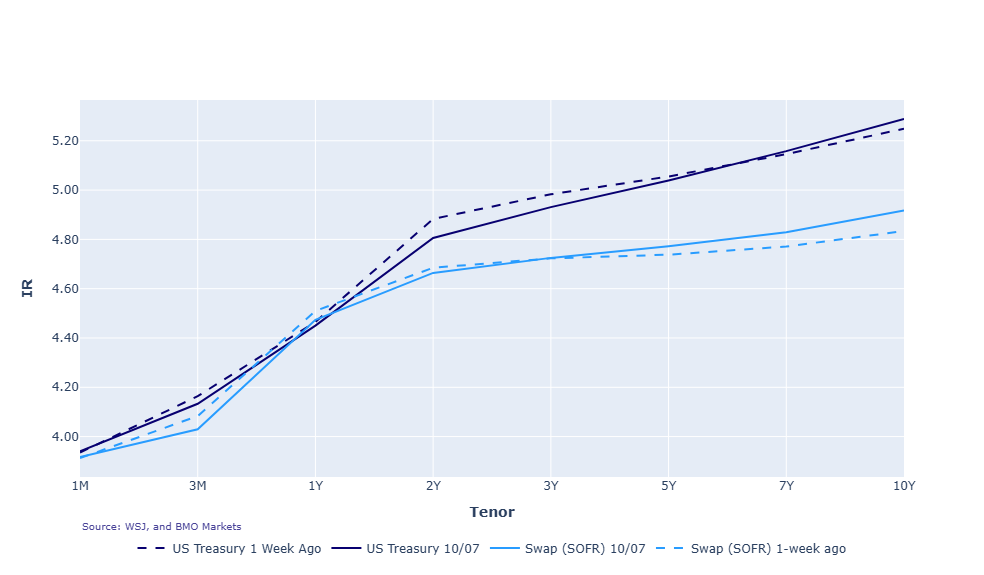
- Rates: Yield curves steepened this week. Treasury yields fell about 7–8 basis points at the 2- and 3-year maturities but edged higher at 7 and 10 years. SOFR swaps showed an even clearer split, with short-term rates easing while the 10-year rate rose about 9 basis points. For banks, this means some relief in near-term funding expectations, but continued pressure on longer-duration securities, fixed-rate loans, and interest-rate risk management.
- AI Skills Demand Surges on Wall Street: Demand for AI-related skills jumped 1,721% across financial services as institutions shift from pilot programs to production-scale deployment. Major banks including JPMorgan, Bank of America, and Goldman Sachs are prioritizing hiring for AI roles focused on code optimization, workflow automation, and customer experience enhancement rather than theoretical research positions. The trend reflects a practical approach to innovation: applying AI to specific workflows where it can deliver measurable productivity gains. Banks increasingly view AI not as a technology experiment, but as essential infrastructure for maintaining competitive relevance.
- September Jobs Report Signals Cooling Labor Market: U.S. payrolls rose just 29,000 in September as unemployment increased to 4.2%, easing expectations for an October Fed hike and pushing short-term Treasury yields lower. For banks, a softer labor market and shifting rate outlook could influence loan demand, deposit pricing, and balance-sheet decisions.
- Charter Access Draws Broader Pushback: Political opposition to OppFi’s proposed acquisition of BNCCORP is part of a wider fight over how nontraditional firms enter banking. Separately, ICBA sued the OCC over national trust charters for crypto companies, arguing they provide federal-bank credibility without the full safeguards and obligations imposed on community banks. Together, the challenges signal growing scrutiny of charter-based expansion and regulatory parity.
Rate Curves